A recent New York Times (NYT) report (November 19) details an unprecedented shift in Orthodox Christianity among Americans, a tradition that historically prides itself on constancy.
The faith, which represents roughly one percent of the US population, is experiencing a nationwide surge in interest, driven heavily by conservative young men. The paper noted that “something is changing in an otherwise quiet corner of Christianity in the United States, one that prides itself on how little it has changed over time.”
The Eastern Orthodox conversion phenomenon among Americans
Clergy across the country report “record attendance numbers” and are struggling to manage “more prospective converts than existing clergy can reasonably handle on their own.” Historically, Orthodox churches were primarily filled by immigrants from countries like Greece and Ukraine, with many of their American children born and raised in the US joining other churches.
Very Rev. Andrew Damick, an Antiochian Orthodox priest, described the influx of “large groups of young people showing up at many parishes” as unprecedented, noting, “This is new ground for everyone.”
Orthodox Christians in America: The appeal of rigor and masculinity
The report emphasizes that the new adherents, described as “energetic new adherents, especially among conservative young men,” are attracted to a more demanding expression of Christian life, often echoing themes associated with the “manosphere.” They describe Orthodoxy as offering “hard truths” and reinforcing their sense of masculinity.
Key aspects of the faith cited as drawing these male converts include:
- Masculine feel and structure: Many converts note that Orthodoxy “has a more masculine feel” than other Christian traditions. Priests are male, may marry, and often have “large beards and big families.” The tradition emphasizes ascetic discipline over contemporary music or therapeutic preaching often associated with evangelical megachurch culture.
- Hard truths and discipline: Converts seek rigor. As one student, Josh Elkins (20), stated, “the Orthodox Church is the only church that really coaches men hard, and says, ‘This is what you need to do,’” while casually referencing technical theological terms.
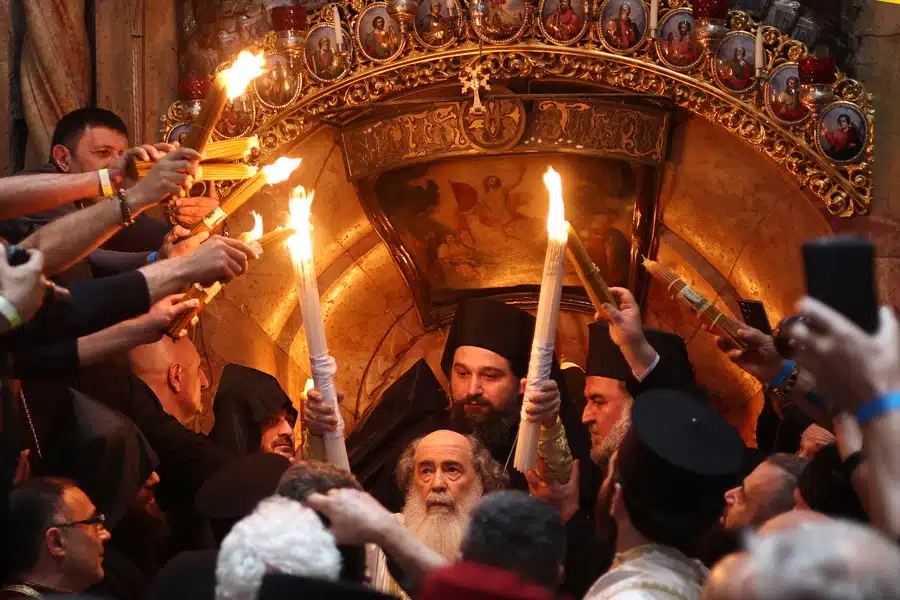
- Rigor of worship: The discipline is a key attraction. Converts express admiration for the length and rigor of the Divine Liturgy, which involves worshipers typically standing. Worshiping, including chanting, incense, extensive icon veneration, and a strict fasting schedule, is often unfamiliar to most Americans.
- Emphasis on purpose: Several converts link their spiritual search to a need for purpose. Parishioner Laric Copes Jr. (28) described Orthodoxy as “a kind of frontier of exploration,” while 26-year-old Jerod Stine articulated a widespread feeling: “Young men need purpose … they’re really being told by society, ‘We don’t really need you.’”
A statistical and cultural shift
This pattern challenges the long-held assumption that younger generations are uniformly becoming less religious. Citing Pew Research Center data, the Times reported that over 60 percent of Orthodox Christians in the United States are men (compared with 46 percent of evangelicals). Furthermore, Orthodox communities tend to be younger, with 24 percent of adult adherents under thirty.
This energy in the Eastern Orthodox Church among Americans reflects a wider trend, as the article concludes, one in which young men are gravitating toward more traditional and structured Christian practices, a trend also visible in the Catholic Church where a significant minority of younger members prefer the Traditional Latin Mass and parishes where women wear veils.
“… Today, however, a locally rooted movement is now emerging, often fueled by online figures and YouTube personalities,
leading critics to label these enthusiastic newcomers “Orthobros,” NYT notes.”